The Anonymity Trilogy · Book One

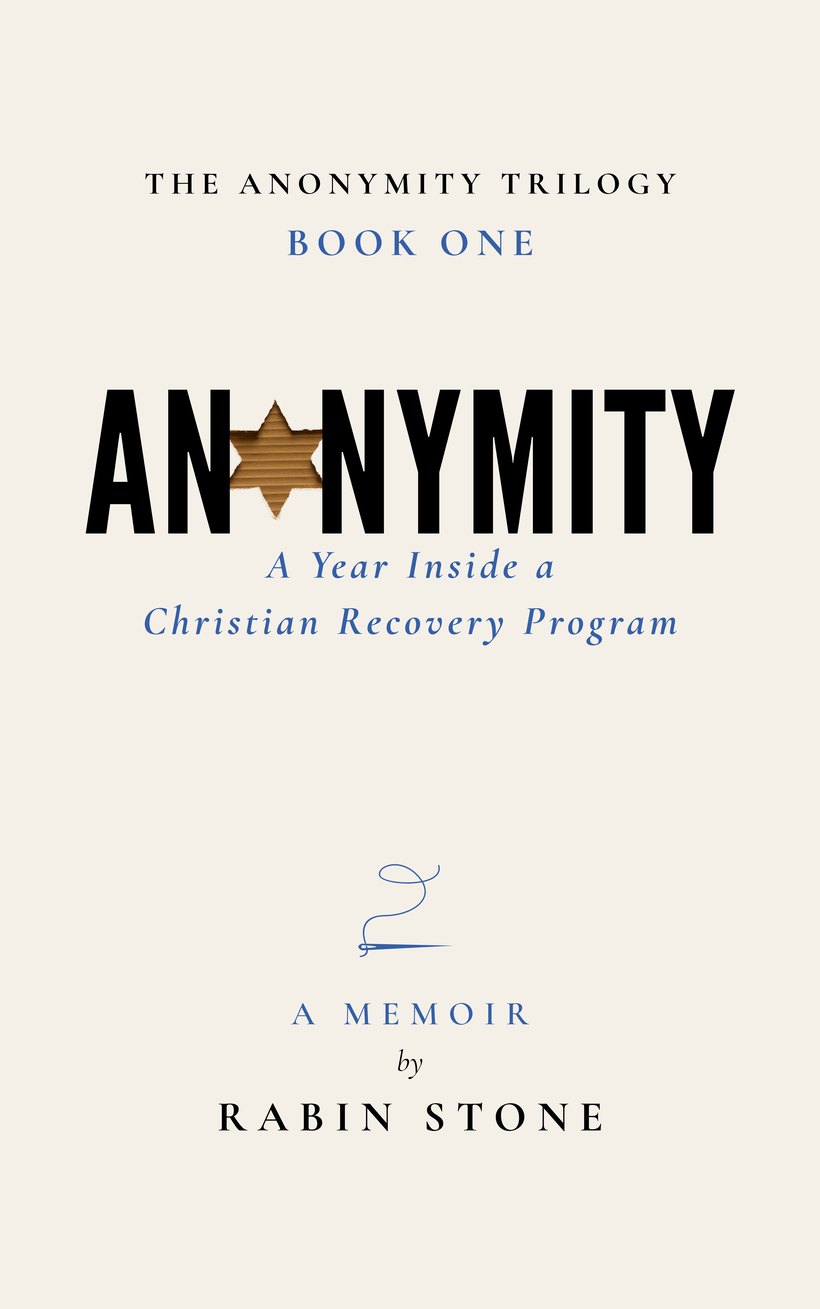
Anonymity

A Year Inside a Christian Recovery Program

Cover of Anonymity by Rabin Stone.

She needed shelter, and they needed someone they could save.

She reads rooms the way a naturalist reads terrain.

I didn’t go undercover.

This has to be said out loud, because everyone who reads “journalist” plus “a year inside” will silently assume undercover, and undercover carries a whiff of exploitation. This is a true story of lived experience from the “inside” as a resident with nothing to sell and no exit strategy, which is why the material is deeper than any embed could produce. The craft came later, when I sat down to render it.

About the author

Rabin Stone

Rabin Stone, seated, wearing large black square glasses, looking directly at the camera.

Rabin Stone writes literary memoir exploring survival, poverty, faith, motherhood, and institutional life.

Beginning during the COVID pandemic, she spent a year in unsheltered homelessness and the following year inside a high-control Christian residential recovery program. There, she kept Shabbat and kosher, completed the annual cycle of Torah readings, and finished six hundred hours of structured coursework in addiction recovery, trauma, grief, boundaries, and related behavioral health subjects, along with one hundred fourteen hours of one-on-one therapy.

She later held director-level responsibility in survivor services, drawing on lived experience to develop programming for survivors of human trafficking, sexual assault, domestic violence, and stalking. Her work served people of all genders, along with their children and pets.

ANONYMITY: A Year Inside a Christian Recovery Program is her debut and the first book in the Anonymity Trilogy, followed by UNSHELTERED: A Year Inside Homelessness and RECIDIVISM: A Year Inside Human Trafficking.

Stone writes under a pen name to protect the privacy of her children and the lives that intersect these stories.

The book

She was not an addict. She was a Jewish mother who had lost her home, her business, and physical custody of her children during the COVID pandemic. After a year of unsheltered homelessness, she signed away another year of her life for a bed inside a high-control Christian residential recovery program.

Her children were on the other side of that year. So she stayed.

As sermons echoed through the building, she held on to a Jewish life the institution could neither understand nor absorb. She studied Torah, kept Shabbat, kept kosher, and counted the days until she could be reunited with her children. Every act of faith became an act of resistance.

Christian rescue had its own vocabulary. The women became students when the institution needed a fundraising success story, residents when it demanded obedience, and volunteers when it needed free labor.

Then antisemitism and violence erupted inside the house. The program's first instinct was not to protect the harmed, but to control the story.

ANONYMITY is an unflinching literary memoir and a fierce institutional critique of what happens when public systems outsource rescue to religious organizations that make shelter conditional on obedience, labor, and belief. At its heart, it is the story of a Jewish mother who refused assimilation, even when survival demanded almost everything else.

Why this book

How did she hold on?

Most contemporary Jewish memoirs trace a journey away from religious observance. Away from Orthodoxy, away from inherited tradition, or away from faith altogether. ANONYMITY reverses that arc. It is not the story of someone escaping Judaism. It is the story of someone fighting to remain Jewish while living inside an institution determined to absorb her into a different religious worldview.

That inversion is rare. The tension is not between belief and unbelief. It is between survival and religious continuity. Whether Judaism is true or meaningful was already settled for me. The conflict is whether I can preserve my Jewish identity when every institutional incentive pushes toward assimilation.

Most faith memoirs are conversion stories or deconstruction stories. This one is neither. It is a story of religious endurance.

From the book

I did not do it out of fear of Hell. As a homeless Jewish woman on the streets of America, I was already living in it.

Anonymity

Buy the ebook

Published August 25, 2026

Buy on Amazon Kindle Buy on Apple Books Buy on Barnes & Noble Nook Buy on Rakuten Kobo

Audiobook and paperback October 7.

Also coming to libraries through OverDrive, cloudLibrary, hoopla, BorrowBox, and Vivlio. Ask yours to order it.

Speaking and panels

She has run the programs, and she has needed them.

Rabin Stone speaks on shelter, poverty, trafficking, and institutional care from both sides of the intake desk. She is available for keynotes, panels, university lectures, staff training, festivals, and broadcast.

Background

  • Director-level responsibility in survivor services, developing programming for survivors of human trafficking, sexual assault, domestic violence, and stalking, serving people of all genders along with their children and pets.
  • A year of unsheltered homelessness beginning during the COVID pandemic.
  • A year inside a high-control Christian residential recovery program, keeping Shabbat and kosher and completing the annual cycle of Torah readings.
  • Six hundred hours of structured coursework in addiction recovery, trauma, grief, boundaries, and related behavioral health subjects, and one hundred fourteen hours of one-on-one therapy.
  • Author of the Anonymity Trilogy, published by Vagabond Compass Media.

Topics

  • Faith that comes with conditions

    What it is to keep a Jewish life inside Christian rescue culture, and what institutions ask people to surrender in exchange for a bed.

  • The myths of homelessness

    Employment, business ownership, and professional work are not protection. Why the public picture of who becomes homeless is wrong.

  • Poverty that arrives before you do

    Generational housing insecurity, and the policies and bureaucracies that keep families cycling through instability.

  • What trafficking actually looks like

    The many forms it takes, the misconceptions that follow survivors, and why the public narrative fails the people inside it.

  • Building zero barrier programs

    Designing services that serve every gender, their children, and their pets, and that measure success in stable housing.

  • Writing from inside closed worlds

    Memoir, observation, and the ethics of telling a story that belongs partly to other people.

Anonymity, 2026

Three formats, two dates

  • Ebook Available now August 25, 2026 ISBN 979-8-9967129-1-5
  • Audiobook In production October 7, 2026 ISBN 979-8-9967129-2-2
  • Paperback Submitted October 7, 2026 ISBN 979-8-9967129-0-8

Published by Vagabond Compass Media. First edition.

Also in the Anonymity Trilogy

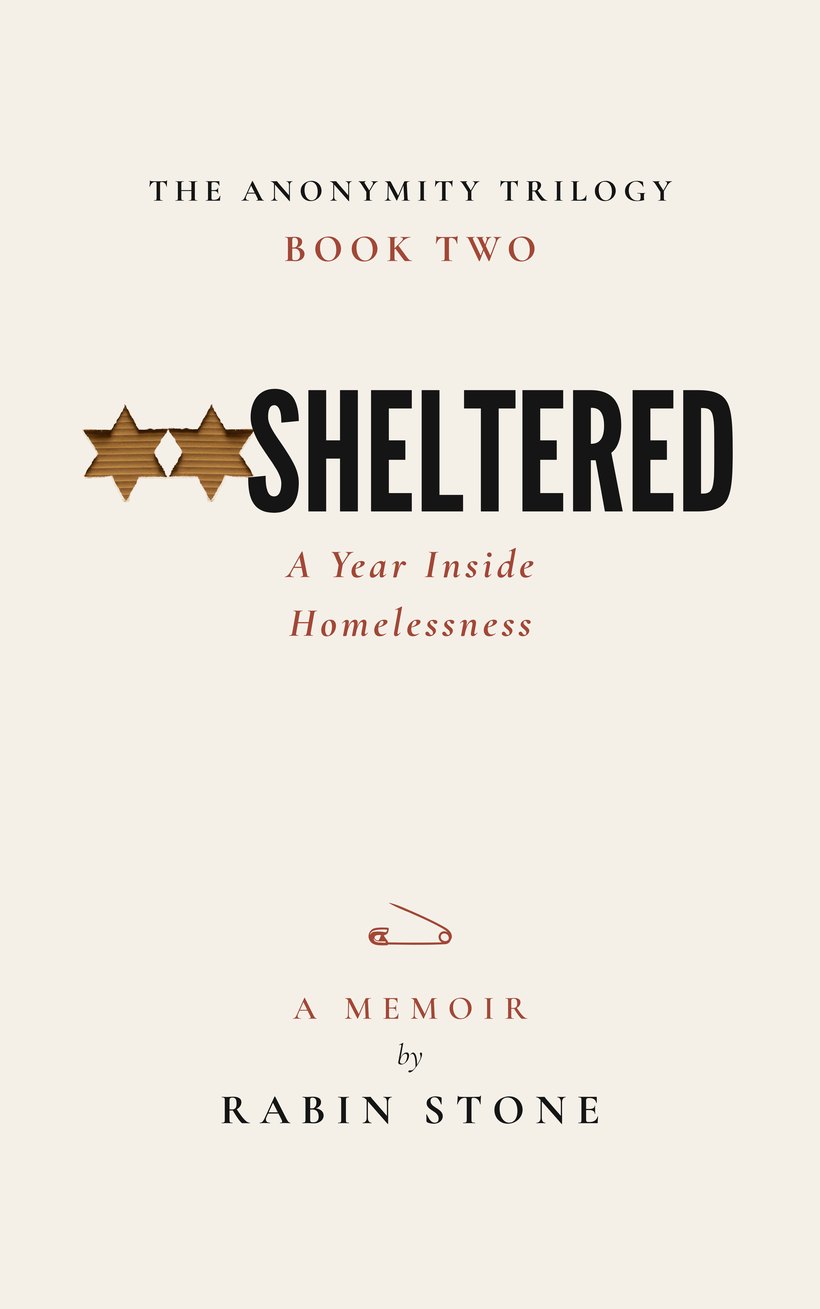
Cover of Unsheltered by Rabin Stone.

Book Two · Forthcoming 2027

Unsheltered

A Year Inside Homelessness

I wasn't always homeless, but homelessness is where I was born.

Beginning with being born the third child of homeless teenage parents and culminating in a year of unsheltered homelessness despite steady employment, business ownership, and professional work in sports media, UNSHELTERED dismantles the myths surrounding homelessness and reveals the policies, bureaucracies, and economic realities that keep people trapped in cycles of instability.

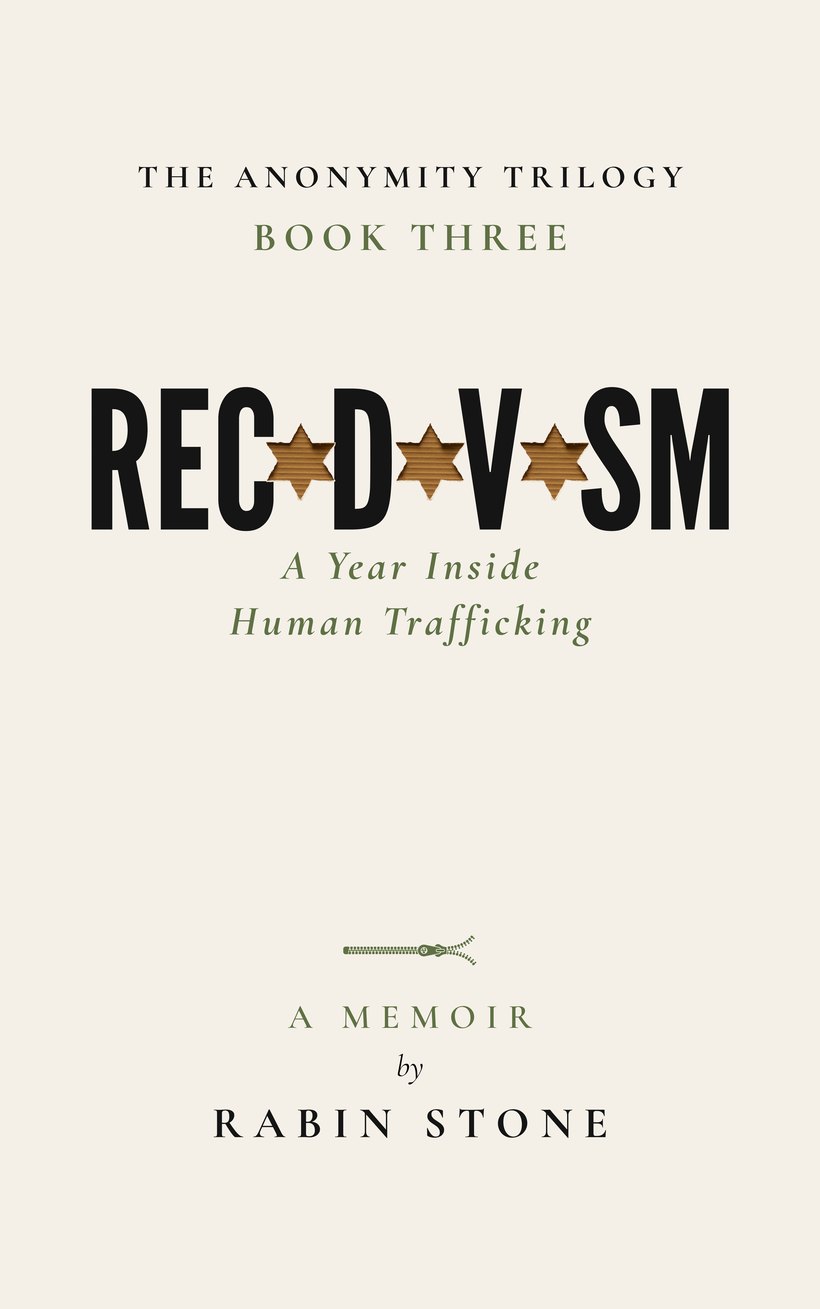
Cover of Recidivism by Rabin Stone.

Book Three · Forthcoming 2027 / 2028

Recidivism

A Year Inside Human Trafficking

The public thinks it knows what human trafficking looks like. Inside the shelter, the truth was far more complicated.

As Director of Programs for a zero barrier shelter serving survivors of human trafficking, sexual assault, stalking, and domestic violence, Rabin Stone worked alongside people of every gender, their children, and their pets. RECIDIVISM offers an insider's view of the many forms trafficking can take, the misconceptions that surround survivors, and the difficult work of building programs that support long term healing, safety, and stable housing.

Read Chapter One

Free

Join the list and the opening chapter arrives in your inbox. You will also be first to know as each format releases.